Aircon Blinking Light and Error Codes Explained
Daikin, Mitsubishi, Panasonic, LG aircon blinking lights and error codes. How to read blink patterns, what's user-fixable vs service-required.
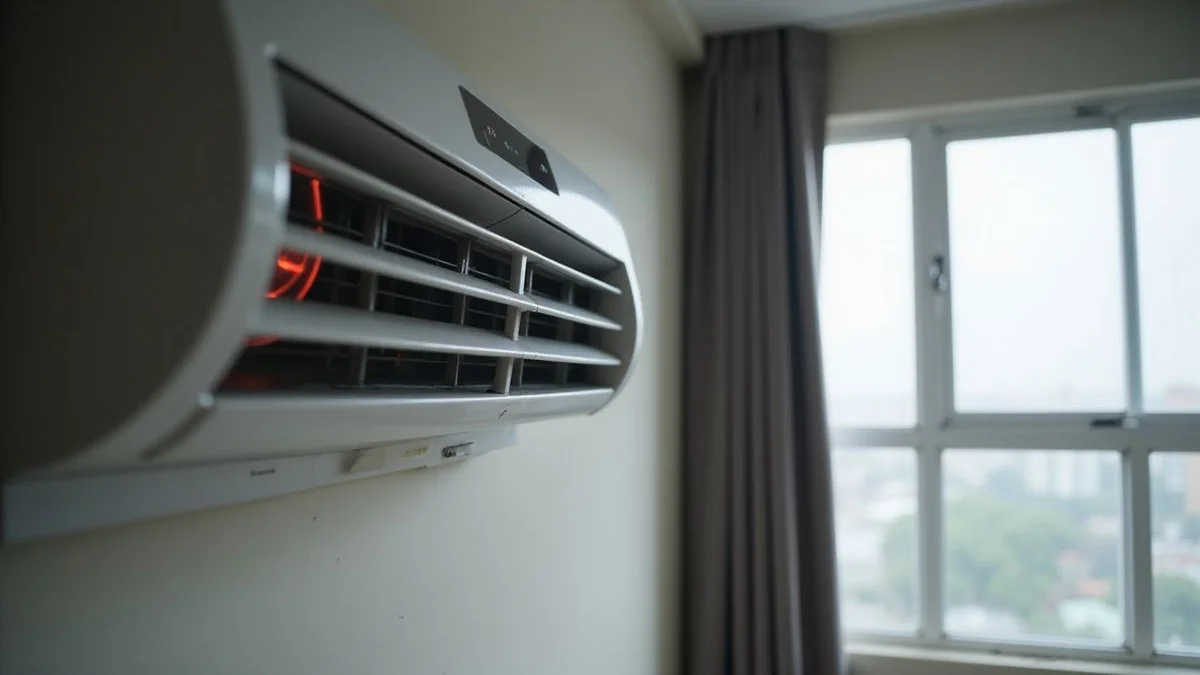
Modern inverter air conditioners feature advanced sensors that monitor temperature, pressure, electrical current, and airflow. These smart systems announce problems via specific signals instead of just stopping silently.
Understanding an aircon blinking light error code saves you time and prevents costly secondary damage.
We founded Coolbest Aircon Servicing to deliver reliable, high-quality cooling solutions to communities across Singapore at affordable prices. This practical guide translates those cryptic flashes and letters into clear diagnostic steps.
How aircon error codes actually work
Two primary display methods indicate faults in modern Singapore-market air conditioners. You will either see a status LED flashing in a specific rhythm on the indoor unit, or you will read an alphanumeric code directly on the remote control.
1. LED blink patterns (on the indoor unit)
The status LED flashes in a distinct rhythm to indicate a specific fault. You will typically see a series of flashes, a short pause, and then the flashes repeat.
Popular models like the Mitsubishi Starmex MSY-GN10VF use this blinking light system to signal underlying power or pressure issues. The exact count maps directly to a specific hardware fault in the manufacturer’s database.
2. Alphanumeric codes (on the remote)
Certain button combinations force a two-character code to display directly on the remote’s LCD screen. A code like “U4” or “E6” pinpoints the exact module experiencing trouble.
For the highly popular Daikin iSmile Series in Singapore, you can retrieve the code by holding the “Cancel” button until “00” appears. You then press the button repeatedly until the unit emits a long beep, revealing the active fault code.
Smart-home applications often display these codes directly on your mobile phone.
How to read a blink pattern
Reading a blink pattern requires counting the exact number of flashes between pauses. You then match this numerical count to the manufacturer’s diagnostic chart.
Follow these exact steps to document the signal:
- Watch the LED indicator through a complete operational cycle.
- Count the exact number of flashes that occur before the pause.
- Note the pause duration, distinguishing between short delays and the longer pause between full cycles.
- Compare your recorded count against the official code list for your specific brand.
Pro Tip: Film 15 to 20 seconds of the blinking LED on your smartphone camera. Capturing a long video ensures you record the full cycle, making it much easier for technicians to diagnose than a verbal count.
Common codes by brand
This is not an exhaustive list, as each manufacturer program contains over 30 distinct codes. These tables highlight the most frequent faults we encounter in Singaporean residential and commercial properties.
Our technicians frequently see these specific communication and sensor errors during routine service calls.
Daikin
| Code | Usual cause |
|---|---|
| U4 | Indoor to outdoor communication lost (wiring or PCB failure) |
| U0 | Refrigerant shortage or electronic expansion valve issue |
| E1 | Outdoor unit PCB error |
| A5 | Thermistor fault or blocked cooling coil |
| C4 | Indoor coil thermistor fault |
| H6 | Indoor fan motor error |
| A1 | Indoor PCB failure |
Mitsubishi Electric
| Code | Usual cause |
|---|---|
| P6 | Frozen coil or icing protection activated |
| P8 | Compressor overheating |
| E6 | Indoor to outdoor communication error |
| E0 | Remote controller signal receiving error |
| P2 | Thermistor fault |
| P5 | Drainage pump fault (where equipped) |
Panasonic
| Code | Usual cause |
|---|---|
| H11 | Indoor to outdoor communication |
| H27 | Outdoor thermistor fault |
| H97 | Outdoor fan motor issue |
| F91 | Refrigerant circuit abnormal |
LG
| Code | Usual cause |
|---|---|
| CH 01 | Indoor unit temperature sensor |
| CH 02 | Pipe temperature sensor |
| CH 05 | Indoor to outdoor communication |
| CH 21 | Compressor protection (current overload) |
Toshiba
| Code | Usual cause |
|---|---|
| F01 | Indoor coil sensor |
| F04 | Compressor sensor |
| F10 | Coil thermistor (secondary) |
| E03 | Indoor communication |
User-fixable vs technician-required
Minor communication glitches are often user-fixable through a simple power reset. Internal component failures require professional diagnostic equipment and specialized replacement parts.
Usually fixable by soft reset (or wait)
A standard soft reset can clear temporary software bugs or communication errors like Daikin’s U4 or LG’s CH 05. Defrost cycle indicators and active timer lights also mimic error codes but resolve themselves automatically.
How to execute a proper soft reset:
- Switch the air conditioner off using the remote control.
- Turn off the wall isolator switch or the dedicated circuit breaker.
- Wait exactly 3 minutes to allow the internal capacitors to discharge completely.
- Restore power and wait 10 seconds before switching the unit back on.
- Consider the issue resolved if the error code does not return within 24 hours of normal operation.
Almost always needs a technician
Hardware failures require immediate professional intervention. Replacing an aircon Printed Circuit Board (PCB) in Singapore currently costs between $350 and $900, depending on the specific model and unit type.
Major faults include:
- Sensor failures: Any thermistor fault (A5, C4, P2, F01) means the component is broken and requires replacement for $70 to $200.
- Motor issues: Fan motor errors (H6, H97) demand a complete motor or control board swap.
- Compressor protection: Codes like P8 or CH 21 point to serious refrigerant leaks, faulty capacitors, or a dying compressor.
- Circuit board errors: E1 and A1 codes confirm a fried motherboard that requires a complete replacement.
What to do right now
You must document the error immediately and stop using the system. Continuing to operate a faulty unit risks permanent damage to expensive components.
Take these immediate actions:
- Note the exact code or film the specific blink pattern on your phone.
- Check the brand manual for a complete troubleshooting table.
- Attempt a soft reset only if the manual identifies it as a basic communication error.
- Halt operation entirely if the code persists, cooling drops, or you hear grinding sounds.
- WhatsApp the specific code and brand directly to the Coolbest support team for rapid diagnosis.
Ignoring a compressor overheat warning (like Mitsubishi’s P8 code) often leads to total mechanical failure. Replacing a burnt-out compressor in Singapore costs between $600 and $1000.
What our code-diagnosis visit looks like
Our technicians arrive equipped with brand-specific digital diagnostic tools to accurately test your system. We isolate the failing component rather than guessing based solely on the displayed code.
The standard diagnostic process involves four steps:
- Identifying the exact brand, model, and reported error code prior to arrival.
- Reproducing the code onsite using the manufacturer’s dedicated service mode access.
- Testing the hardware with multimeters and manifold gauges to verify electrical and refrigerant limits.
- Providing a transparent repair quote that includes both parts and labour.
We rely on well-stocked local supply hubs for rapid turnarounds. Daikin and Mitsubishi replacement parts are widely available in Singapore, allowing for fast repairs.
Some mid-tier brands require 2 to 5 days for specific circuit boards to arrive from regional warehouses. Your technician will communicate all timeline expectations clearly before beginning any work.
When the code is a symptom, not the cause
A specific error code frequently points to a failing sensor, but the actual root cause might be a dirty component nearby. Thorough manual diagnosis prevents unnecessary and expensive part replacements.
Common examples of misleading codes include:
- “Compressor overheat” (P8): This often indicates a severe lack of refrigerant or heavily blocked condenser coils, rather than a broken compressor.
- ”Thermistor fault” (A5): A Daikin A5 code frequently triggers due to a severely choked indoor air filter restricting airflow, not a damaged sensor.
- ”Communication lost” (U4): The circuit board might be perfectly fine, but a single loose wire at the outdoor terminal blocks the signal.
We inspect the physical condition of the entire system first. Cleaning a blocked coil or tightening a loose terminal is always preferable to swapping an expensive motherboard.
Book a diagnosis
Fast action prevents a minor sensor issue from escalating into a major system failure. Most routine error code repairs can be scheduled within 1 to 3 days across the West Region.
We offer same-day diagnostic visits for urgent breakdowns.
WhatsApp us your recorded blink video or the exact alphanumeric code, along with your unit’s brand and model number. See repair service details for our complete service coverage and warranty information.
Part of the Aircon Repair guide hub
← Back to the main Aircon Repair pageQuestions Answered
Frequently Asked Questions
Can I reset my aircon to clear an error code?
A power cycle (switch off at isolator, wait 2 minutes, power back on) can clear soft faults from a temporary glitch. If the code returns within a day, it's a real issue that needs technician diagnosis — not a display glitch.
Are all brand error codes the same?
No. Daikin, Mitsubishi, Panasonic, LG, and others each use different error-code schemes. Some use blink patterns, some show 2-letter codes on the remote, some use both. Always check your brand-specific code list.
Is a blinking light always a fault?
No. Some blinks indicate normal operating states — defrost cycle, timer active, sleep mode. Fault blinks are usually rapid, repeated, and occur with no other function running. The operating manual for your unit lists the difference.
 LICENSED
 About the Author
Mr Chong
Founder & Licensed HVAC Technician, Coolbest Aircon
Mr Chong founded Coolbest Aircon in Jurong after more than 18 years in Singapore’s HVAC industry. He started as an apprentice technician on HDB rooftops, moved into commercial chiller work, then built Coolbest to offer honest, diagnostics-first aircon servicing across the West. He holds a BCA-licensed contractor registration, NEA-certified refrigerant handler status, and personally trains every technician on the team. Mr Chong writes these guides to answer the same questions he hears on every job call.
Related Guides
Aircon Not Cold: Why Your Aircon Is Blowing Warm Air
Aircon blowing warm air in Singapore? The 5 most common causes: dirty filter, frozen coil, low refrigerant, thermostat, compressor. Quick DIY checks before booking.
Read guide →Noisy Aircon: Rattling, Humming, and Buzzing Sounds
Aircon rattling, humming, or buzzing? What each sound usually means: loose part, capacitor/fan motor, electrical fault. When it's compressor-risk level.
Read guide →Aircon Thermostat and Remote Troubleshooting
Aircon remote unresponsive, wrong temperature, or display blank? Step-by-step troubleshooting for Daikin, Mitsubishi, Panasonic, LG remotes.
Read guide →Ready for cool, clean air — today?
Chat with Coolbest on WhatsApp for same-day aircon service in the West.