Aircon Repair vs Replacement: How to Decide
Repair or replace your aircon? The 50% rule, age thresholds, R22 refrigerant phase-out, and when replacement saves money long-term.
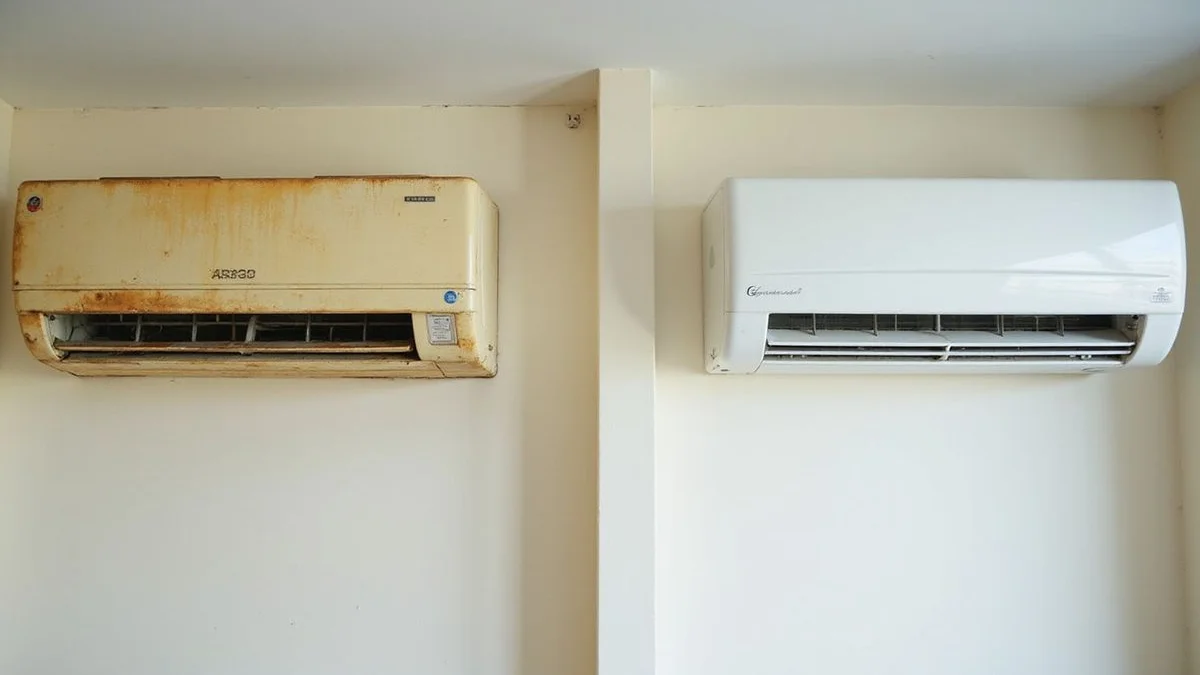
Repairing an ageing air conditioner often costs more in long-term energy waste than the upfront price of a new unit.
A 2026 market analysis shows that average repair costs in Singapore now range from S$50 to over S$500 for major faults. We built this guide to give you a clear framework for making the smartest financial decision. You can save hundreds of dollars by knowing exactly when to fix a faulty unit and when to upgrade.
Our team at Coolbest Aircon Servicing sees these scenarios daily. This article explains the exact thresholds that make a new system the better option over a quick fix.
The 50% rule (with Singapore adjustments)
We apply a strict 50% rule to evaluate whether a unit is worth saving. The standard industry guideline suggests replacing your air conditioner if the repair quote exceeds half the cost of a brand new unit. Our technicians adjust this baseline using four specific factors relevant to the Singapore climate in 2026.
- Unit age: A 3-year-old aircon receives a higher repair threshold. Systems pushing 12 years old generally require replacement.
- Refrigerant type: Older R22 units face a strict phase-out timeline. The National Environment Agency (NEA) enforces a complete import ban on R22 by 2030, making parts increasingly scarce.
- Repair history: Experiencing three breakdowns in a single year signals a systemic failure. You will likely face another breakdown soon.
- Energy efficiency gap: An older non-inverter unit running six hours nightly consumes significantly more power. Upgrading to a modern 5-tick inverter system pays for itself in utility savings within four to five years.
By the numbers — rough replacement thresholds
We constantly monitor the pricing of popular models like the Daikin Smile Series and Mitsubishi Starmex. A modern 9000 BTU inverter split aircon in Singapore currently costs between S$900 and S$1,800. This estimate includes the unit, standard installation, and the disposal of your old equipment. Our threshold guidelines help you make a logical choice.
- Unit age 0 to 3 years: You should proceed with the repair unless the quote exceeds S$1,200. Most faults occurring in this window fall under the manufacturer warranty.
- Unit age 4 to 7 years: Approve the fix unless the cost surpasses S$600 and involves obsolete R22 refrigerant.
- Unit age 8 to 10 years: A repair quote over S$500 means you should probably buy a new system. A second major repair within a 12-month period also justifies an upgrade.
- Unit age 11+ years: You should buy a new unit unless the issue is a simple S$120 capacitor or filter replacement.
These figures act as starting points for a practical discussion about your specific cooling needs.
The compressor question
The compressor serves as the heart of your cooling system and remains the most expensive component to replace. The financial math changes fundamentally when this critical part fails. We usually see compressor replacement costs ranging from S$600 to S$1,200 depending on the specific brand.
Labour charges add S$150 to S$250 to your final bill, and refrigerant recharges cost an additional S$80 to S$200 based on the gas type. A total compressor repair typically sets you back between S$900 and S$1,500.
You must utilize your warranty if the unit is under five years old, meaning you only pay the basic labour fees. Our advice changes for systems between five and eight years old that lack warranty coverage. Comparing a S$1,500 repair to a brand new S$1,800 unit makes the choice much clearer. We strongly prefer replacement in this age bracket for several verifiable reasons.
- New units include a fresh 3 to 5-year manufacturer warranty.
- Energy efficiency gains translate to 15 to 30% lower monthly bills.
- You gain a guaranteed 10 to 15-year lifespan compared to the unpredictable future of a patched system.
Any unit older than nine years with a failed compressor requires immediate replacement.
The R22 vs R32 inflection point
Singapore installations completed before 2014 frequently rely on R22 refrigerant. The industry shifted to R32 as the new standard around 2015. Our current installations for 2026 rely exclusively on R32 gas to comply with environmental regulations.
The Montreal Protocol dictates the global phase-out of R22 due to its ozone-depleting properties. Consumers face several direct consequences from this international treaty.
- Sourcing R22 gas costs approximately two to three times more per kilogram than R32.
- Fewer technicians possess the certification to work on R22 systems.
- Replacement parts like R22-specific compressors and valves are increasingly scarce.
- The NEA enforces strict compliance measures leading up to a complete import ban in 2030.
You must strongly consider a full replacement if your R22 unit requires significant refrigerant work. This includes resolving major leaks, swapping compressors, or replacing corroded coils.
The running cost case for replacement
Air conditioning technology has advanced dramatically over the last decade. A standard bedroom setup running six hours a night for 300 nights a year highlights these cost differences. We calculated these projections using the current SP Group regulated electricity tariff of 29.72 cents per kWh for the second quarter of 2026.
| Unit Type | Annual power cost (S$) | 5-year cost (S$) |
|---|---|---|
| 2014 non-inverter 9000 BTU | S$480 to S$620 | S$2,400 to S$3,100 |
| 2026 R32 inverter 9000 BTU (5-tick) | S$280 to S$380 | S$1,400 to S$1,900 |
| Estimated Savings | S$200 to S$240/yr | S$1,000 to S$1,200 |
Paying S$700 to patch an older unit makes little financial sense when a S$1,200 replacement generates over S$1,000 in guaranteed electricity savings. Our data shows this upgrade pays for itself well within the warranty period. Actual savings will fluctuate based on your specific usage patterns and future tariff adjustments.
The emotional / convenience factor
Replacing an old unit provides tangible lifestyle benefits that extend beyond basic math. You gain access to modern smart home capabilities and improved indoor air quality.
Pros:
- Quieter operation as modern inverters run 30 to 40% quieter.
- Faster room cooling through advanced inverter ramp-up technology.
- Built-in dehumidification features combat Singapore’s severe humidity.
- Mobile applications like Daikin D-Mobile allow for remote WiFi control.
- A cleaner start eliminates years of accumulated bacterial biofilm inside the machine.
Cons:
- Disruption for installation day takes 3 to 5 hours on-site.
- Purchasing new equipment requires a larger upfront cash outlay.
- Users need to re-learn any new features or remote layouts.
Our technicians ensure the installation process is as seamless as possible. You will barely notice the temporary disruption to your daily routine.
When we recommend repair despite age
Certain situations justify fixing an older air conditioner. A minor issue does not automatically condemn a functioning system. Our technicians evaluate the specific fault before pushing for a costly upgrade.
- Simple fault, cheap fix: Replacing a faulty S$120 capacitor on an 11-year-old unit is a smart move. You buy yourself 2 to 3 more years of cooling for a minimal investment.
- Light usage: A guest bedroom system used only 40 nights a year generates tiny annual electricity savings. Repairing this unit makes perfect logical sense.
- Upcoming renovation: Patching a failing system to last six more months is practical if you plan to demolish the room soon.
- Sentimental or budget reasons: You always have the final say on where to allocate your home maintenance funds.
We respect your financial boundaries and will execute the repair safely. Your long-term satisfaction remains the top priority.
When we recommend replacement despite youth
A relatively new air conditioner occasionally requires a premature replacement. Certain catastrophic failures make repairs economically unviable. We transparently advise customers when fixing a newer system is a mistake.
- Major compressor failure at 4 to 5 years: Buying a new system often wins if the original installer only provided a basic one-year warranty.
- Chronic recurring faults: Fixing the exact same sensor issue three times points to a systemic manufacturing defect. You should cut your losses and replace the faulty equipment.
- Water damage or corroded coil: Singapore’s salty coastal air frequently causes severe coil corrosion. A costly coil replacement usually signals that other internal components are also deteriorating.
Our goal is to prevent you from funding an endless cycle of expensive service calls. Smart preventative choices protect your wallet in the long run.
How we help you decide
Our diagnostic visits provide complete transparency. Factual data allows you to make an educated choice.
- Honest repair quote: This covers the exact cost of the required fix.
- Honest replacement quote: This details the price of a comparable new unit, including standard installation and safe disposal of the old equipment.
- Data-driven recommendation: This highlights the most logical financial path based on current market rates, free of sales pitches.
You always retain full control over the final decision. We regularly advise customers to upgrade their equipment instead of accepting a S$400 repair job. The team has also performed S$600 repairs on nine-year-old systems because the owner had valid reasons to keep them.
Book a diagnosis to get the real numbers
Evaluating aircon repair vs replacement requires a professional assessment. We need to inspect the hardware directly to confirm the underlying fault.
WhatsApp us with your system brand, its age, and a description of the current issue. Our experts will diagnose the problem, quote both potential paths, and give you space to decide. Same-day appointments in the West Region are typically available. See repair service details and installation service for more comprehensive pricing.
Part of the Aircon Repair guide hub
← Back to the main Aircon Repair pageQuestions Answered
Frequently Asked Questions
What's the typical lifespan of an aircon in Singapore?
Well-serviced split aircons last 10-15 years in Singapore's climate. Without regular chemical overhaul, expect 7-10 years. The compressor is usually the component that dies first; when it goes and it's out of warranty, replacement often wins on economics.
Is it worth repairing a 10-year-old aircon?
It depends on the specific fault and cost. A S$150 capacitor on a 10-year-old unit — yes, worth it. A S$800 compressor on a 10-year-old unit using R22 refrigerant — probably not; replacement is better value. We give honest case-by-case advice.
Do I really need to replace R22 aircons?
Not immediately, but the repair economics are getting worse. R22 refrigerant is harder to source and more expensive each year in Singapore. Any major repair that involves refrigerant work on an R22 unit should be weighed carefully against replacement with a modern R32 inverter unit.
 LICENSED
 About the Author
Mr Chong
Founder & Licensed HVAC Technician, Coolbest Aircon
Mr Chong founded Coolbest Aircon in Jurong after more than 18 years in Singapore’s HVAC industry. He started as an apprentice technician on HDB rooftops, moved into commercial chiller work, then built Coolbest to offer honest, diagnostics-first aircon servicing across the West. He holds a BCA-licensed contractor registration, NEA-certified refrigerant handler status, and personally trains every technician on the team. Mr Chong writes these guides to answer the same questions he hears on every job call.
Related Guides
Aircon Not Cold: Why Your Aircon Is Blowing Warm Air
Aircon blowing warm air in Singapore? The 5 most common causes: dirty filter, frozen coil, low refrigerant, thermostat, compressor. Quick DIY checks before booking.
Read guide →Chemical Overhaul for Aircons 10+ Years Old
Is your 10-year-old aircon worth overhauling? Coolbest Aircon's decision framework for Singapore homes: when overhaul pays off and when replacement is smarter.
Read guide →Inverter vs Non-Inverter Aircon: Which Is Worth It?
Inverter aircon premium worth it in Singapore? 15-30% lower electricity, payback period, noise, lifespan. Full comparison with our honest recommendation.
Read guide →Ready for cool, clean air — today?
Chat with Coolbest on WhatsApp for same-day aircon service in the West.