Inverter vs Non-Inverter Aircon: Which Is Worth It?
Inverter aircon premium worth it in Singapore? 15-30% lower electricity, payback period, noise, lifespan. Full comparison with our honest recommendation.
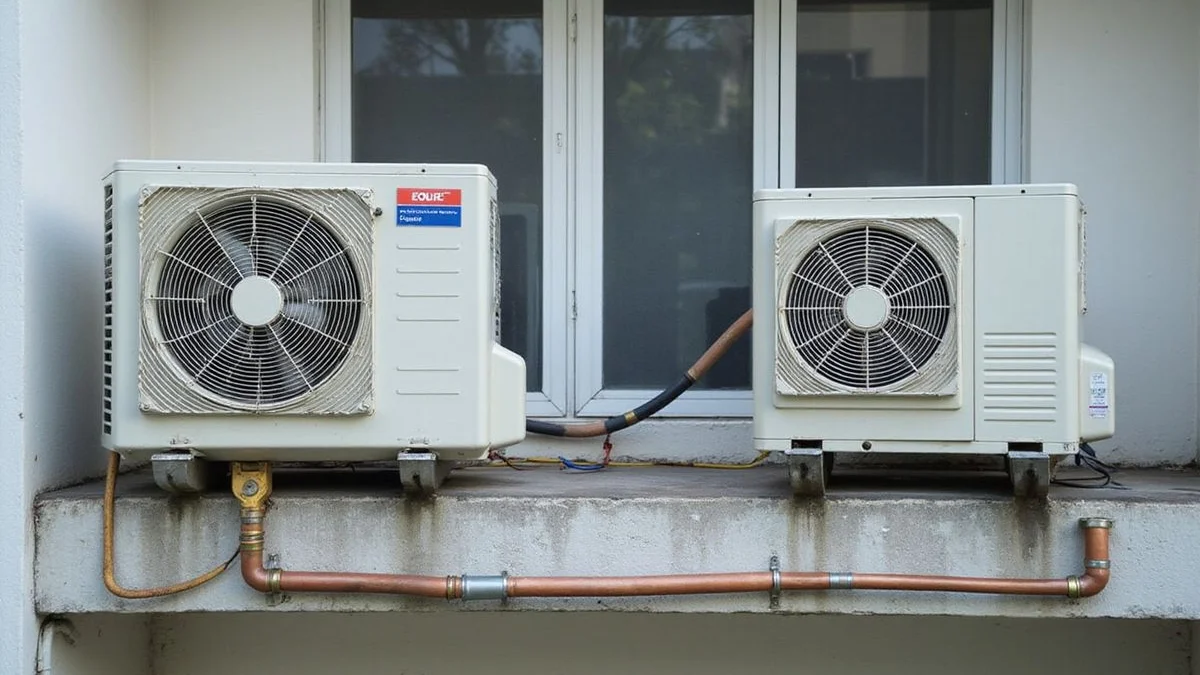
We understand the confusion surrounding the inverter vs non-inverter aircon debate for local homeowners and business operators. Choosing the wrong cooling system can cost you hundreds of dollars annually in wasted electricity or unnecessary upfront premiums.
Our team has analysed the latest 2026 National Environment Agency (NEA) data to settle this argument with hard facts. Air conditioning accounts for up to 60% of an average Singapore household utility bill.
This guide clarifies the exact technology differences and financial payback periods so you can make a confident choice.
The actual technology difference
The primary technological difference lies in how the compressor operates inside the condenser unit. Inverter models adjust their cooling speed dynamically, while non-inverter units only run at maximum power or shut off completely.
Non-inverter (fixed-speed)
A non-inverter compressor runs at full speed or stays completely off. When your room hits the target temperature, the compressor stops entirely.
As the room warms up again, the compressor restarts at maximum capacity. This binary operation causes the room temperature to wander by 1 to 2 degrees Celsius between cycles.
Every single start draws a massive current surge from your electrical grid. The resulting noise and comfort levels are merely acceptable for basic cooling needs.
Inverter (variable-speed)
An inverter compressor uses a sophisticated printed circuit board (PCB) to vary its speed continuously from 30% to 110% of its nominal capacity. It ramps up incredibly fast to cool a sweltering room, then slows down to hold the temperature steady.
Our field technicians observe that this variable operation prevents sudden power spikes. The direct result is a tighter temperature hold, softer operational noise, and significantly lower total electricity use.
The electricity savings, by the numbers
Inverter aircons deliver significant financial savings over time, especially for heavy users running their units daily. Upgrading to a 5-tick inverter unit can save a household over S$300 annually per living room setup.
These realistic figures are based on the SP Group regulated residential electricity tariff of 29.72 cents per kWh for Q2 2026.
Bedroom, 6 hours/night, 300 nights/year
| Config | Annual kWh | Annual cost | Over 10 years |
|---|---|---|---|
| 9000 BTU non-inverter 3-tick | 1,750 | S$490 | S$4,900 |
| 9000 BTU inverter 3-tick | 1,420 | S$395 | S$3,950 |
| 9000 BTU inverter 5-tick | 1,200 | S$335 | S$3,350 |
| Savings (non-inverter to 5-tick inverter) | S$155/yr | S$1,550 |
Living room, 5 hours/day, 350 days/year
| Config | Annual kWh | Annual cost | Over 10 years |
|---|---|---|---|
| 18000 BTU non-inverter 3-tick | 3,200 | S$895 | S$8,950 |
| 18000 BTU inverter 5-tick | 2,100 | S$590 | S$5,900 |
| Savings | S$305/yr | S$3,050 |
We highly recommend factoring in these long-term utility costs before purchasing. These figures are estimates, but the pattern remains consistent across all rate classes.
The more hours you run the system, the faster an inverter model pays for itself.
The price premium breakdown
You will generally pay a S$150 to S$400 upfront premium for an inverter aircon compared to a non-inverter unit of the exact same cooling capacity. This initial price difference is the main hurdle for most budget-conscious buyers.
Here is the typical inverter price premium over non-inverter units within the same brand tier:
- 9000 BTU: S$150 to S$250 more
- 12000 BTU: S$180 to S$280 more
- 18000 BTU: S$220 to S$320 more
- 24000 BTU: S$280 to S$400 more
Payback periods
| Usage level | Payback (heavy use 6+ hrs) | Payback (moderate 3-4 hrs) | Payback (light under 2 hrs) |
|---|---|---|---|
| 9000 BTU | 1 to 2 years | 2 to 3 years | 5 to 8 years |
| 12000 BTU | 1 to 2 years | 2 to 3 years | 5 to 8 years |
| 18000 BTU | 1 year | 2 years | 4 to 6 years |
For heavy-use spaces, you would have to actively try to make the maths not work out in favour of an inverter.
For light-use rooms like guest bedrooms, the payback stretches beyond the unit’s practical lifespan. A non-inverter becomes a highly reasonable budget choice in those specific scenarios.
Beyond electricity: the other differences
Beyond just utility bills, inverter models provide superior comfort, lower noise levels, and a significantly longer operational lifespan. The technological upgrades affect daily living quality in several noticeable ways.
Comfort
- Inverter: The temperature holds steadily within 0.5 degrees Celsius of your setting. You will experience no on-off cycling drafts, making it much more comfortable for sleeping at night.
- Non-inverter: The climate swings by 1 to 2 degrees Celsius constantly. You will actually feel the room get a touch warm, then cold again as the compressor cycles back on.
Noise
- Inverter: These systems run generally 2 to 5 decibels quieter. The indoor unit noise is similar, but the outdoor compressor produces a smoother sound with zero start-stop transients.
- Non-inverter: You will hear noticeable compressor starts, characterised by a louder mechanical bump during every cycle.
Cooling speed from hot room
- Inverter: The system ramps above its nominal output to cool a sweltering room rapidly. It can hit 110% compressor speed until it reaches the target climate, then it throttles back.
- Non-inverter: These units possess a fixed output only. Cooling takes much longer if the room is significantly hotter than your desired setting.
Dehumidification
- Inverter: Moisture removal is vastly superior because of continuous low-speed operation. More pass-time across the cold evaporator coil equals greater condensation and lower humidity.
- Non-inverter: You get good initial dehumidification when the system is running, but moisture removal stops entirely when the compressor cycles off.
Lifespan
- Inverter: Modern variable-speed units suffer less mechanical wear from fewer full-power starts. Many 2026 field reports suggest these compressors easily surpass 10 years of reliable service.
- Non-inverter: Repeated full-load starts add heavy mechanical fatigue. You will generally see a slightly shorter typical compressor life of around 5 to 7 years.
Where non-inverter still makes sense
Non-inverter systems remain a practical choice for scenarios with strict upfront budget limits or very infrequent usage. These traditional models are absolutely not obsolete yet.
Our service teams regularly install non-inverter units for the following situations:
- Rental properties where the tenant pays the electricity bill directly, rather than the landlord.
- Light-use rooms such as guest rooms, storage areas, or hobby spaces that see minimal activity.
- Tight budgets where saving S$200 to S$300 upfront matters significantly more than a 3-year electricity payback plan.
- Small enclosed spaces where cooling happens incredibly fast anyway, making inverter advantages far less pronounced.
When inverter is obviously the right choice
An inverter aircon is the definitive choice for primary living spaces and bedrooms that require consistent daily cooling. The long-term comfort and financial return easily justify the higher purchase price.
We strongly suggest installing a 5-tick inverter system for these specific locations:
- Main bedrooms that you sleep in every single night.
- Living and dining rooms that your family occupies daily.
- Any room where children or elderly residents sleep, because stable comfort matters more than saving a few hundred dollars.
- Home offices utilised for 8 or more hours on standard work days.
- Condominiums or larger homes where overall electricity bills are already uncomfortably high.
Brands and inverter maturity
Japanese brands currently lead the market in inverter reliability, backed by over 15 years of dedicated engineering refinement. Their electronic control systems and compressor technologies are highly sophisticated and stable.
Top-tier Japanese manufacturers like Daikin, Mitsubishi, Panasonic, and Toshiba produce exceptionally well-refined inverter systems.
Korean giants like LG also demonstrate mature technology, often utilizing advanced dual-inverter setups for rapid cooling.
Budget Chinese brands such as Midea and Hisense have improved their build quality significantly in recent years. These models tend to be 5% to 10% less efficient than their Japanese equivalents at the exact same NEA tick rating.
Inverter-specific servicing notes
Maintaining an inverter unit is similar to a traditional model, but major electronic repairs can carry higher replacement price tags. These modern systems rely on complex Printed Circuit Boards (PCBs) to manage variable speeds.
Our maintenance protocol involves a few practical implications for modern homeowners:
- Chemical washes remain identical: Deep coil cleaning does not differ between standard and variable-speed unit types.
- Repair costs trend slightly higher: Replacing a damaged PCB on a premium inverter model averages S$350 to S$450 in 2026, versus S$150 to S$250 for a non-inverter board.
- Diagnosis is remarkably easier: Smart inverters feature built-in diagnostic error codes that guide technicians directly to the failing component.
By 2026, all major brands sell primarily inverter models across Singapore. Non-inverter systems represent a diminishing category, mostly reserved for budget window units or specific commercial applications.
Our recommendation
We strongly advise installing an inverter air conditioner with a 4 or 5-tick NEA energy rating for the vast majority of local households. The extra S$200 to S$300 upfront cost pays back faster than almost any other home appliance upgrade available today.
For the remaining 20% of cases involving light-use rooms or strict budget constraints, a non-inverter remains a completely valid alternative.
See our full how to choose an aircon guide for the broader decision framework, or WhatsApp us for a specific recommendation based on your flat and rooms. Installation details are readily available on our aircon installation service page.
Part of the Aircon Installation guide hub
← Back to the main Aircon Installation pageQuestions Answered
Frequently Asked Questions
How much can I actually save with an inverter aircon?
For a heavily-used bedroom (6+ hours nightly), inverter typically saves S$180-280 per year in electricity vs a comparable non-inverter. For living rooms used 4-8 hours, S$250-400 per year. The payback on the price premium (S$150-300) is usually 1-2 years.
Are inverter aircons less reliable?
No, modern inverters are as reliable as non-inverters. Both technologies are mature. The concern from a decade ago about inverter PCB complexity is largely resolved — parts and diagnostics are standardised. Any difference in failure rates is too small to base a decision on.
Is an inverter worth it for a guest bedroom used rarely?
Probably not. If the aircon runs 30 nights a year, annual electricity savings from inverter are maybe S$30. The price premium takes 5-10 years to pay back — longer than the unit's effective life in light-use scenarios. Non-inverter is fine for occasional-use rooms.
 LICENSED
 About the Author
Mr Chong
Founder & Licensed HVAC Technician, Coolbest Aircon
Mr Chong founded Coolbest Aircon in Jurong after more than 18 years in Singapore’s HVAC industry. He started as an apprentice technician on HDB rooftops, moved into commercial chiller work, then built Coolbest to offer honest, diagnostics-first aircon servicing across the West. He holds a BCA-licensed contractor registration, NEA-certified refrigerant handler status, and personally trains every technician on the team. Mr Chong writes these guides to answer the same questions he hears on every job call.
Related Guides
How to Choose the Right Aircon for Your Singapore Home
Choosing a new aircon in Singapore? BTU sizing by room, inverter vs non-inverter, brand reliability, system type, tick rating. Practical buyer's guide.
Read guide →Best Aircon Brands for HDB and Condo in Singapore
Daikin, Mitsubishi, Panasonic, Toshiba, LG compared for Singapore HDB and condo use. Reliability, efficiency, service network, parts availability.
Read guide →Split vs Window vs Multi-Split Aircon: Which System Type?
Split, window, or multi-split aircon for your Singapore home? Pros, cons, costs, ideal use case for each. How to decide.
Read guide →Ready for cool, clean air — today?
Chat with Coolbest on WhatsApp for same-day aircon service in the West.