Aircon Leaking Water: Causes and Fixes
Aircon dripping water in your HDB or condo? The 4 most common causes: blocked drainage, dirty evaporator, installation tilt, coil ice thaw. Same-day repair available.
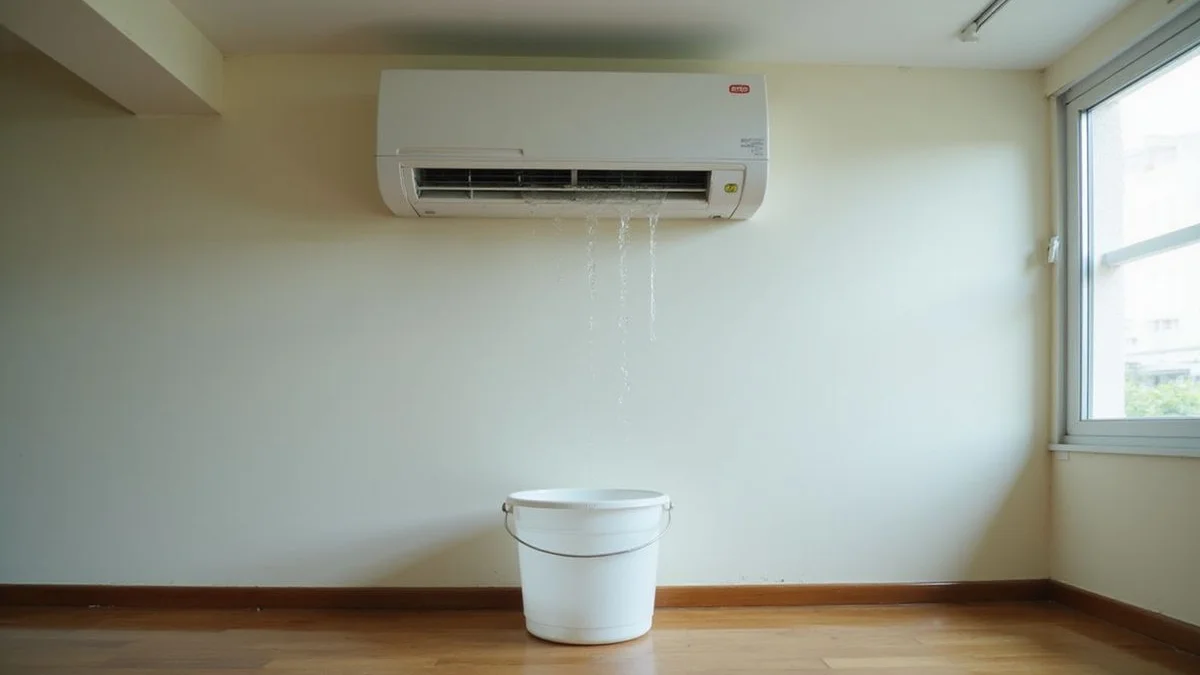
We founded Coolbest Aircon Servicing with a mission to deliver reliable, high-quality cooling solutions to communities across Singapore at affordable rates. Discovering your aircon leaking water is never normal and always requires quick attention.
A standard 9,000 BTU split-type aircon in Singapore can generate between 1 to 3 litres of condensation water every hour.
Our experience shows that most of these leaks are fixable on the same day. This guide covers the exact mechanisms causing the overflow and the professional steps required to restore proper function.
Why aircons produce water in the first place
Air conditioners produce water because they actively dehumidify the air as part of the cooling process. Warm, humid Singapore air hits the cold evaporator coil, causing water vapour to condense into liquid.
We see this natural condensation process in every functioning unit across the island. That liquid is supposed to drip into a drainage tray, flow down a specific PVC pipe, and exit safely outside your home.
Singapore experiences average humidity levels around 80 percent throughout 2026, forcing units to extract massive amounts of moisture. Our daily service calls confirm that this high humidity places immense strain on drainage systems. When any part of the drainage chain breaks, this accumulated water simply takes the path of least resistance. This overflow often bypasses the fan coil fascia and spills directly onto your flooring.
The 4 common causes of aircon leaking water
We categorise indoor water leaks into four primary mechanical failures. These issues range from simple biological clogs to complex installation errors.
The most common failures include:
- Blocked drainage pipes (60 percent of cases)
- Dirty evaporator coils (15 percent of cases)
- Incorrect installation tilt (15 percent of cases)
- Frozen coil thawing (10 percent of cases)
Cause 1: Blocked drainage pipe (60% of cases)
A blocked drainage pipe stops water from exiting the unit and forces it to overflow the drainage tray. Mould and bacterial biofilm grow rapidly inside the dark, damp environment of the pipe.
We frequently encounter massive blockages in standard 16mm (5/8 inch) HDB drainage pipes. These narrow PVC tubes are highly susceptible to clogging from Pseudomonas or Legionella bacteria build-up. As water backs up behind this biological sludge, it overtops the tray and spills out the front of your unit.
Signs this is your cause:
- The leak worsens the longer the aircon runs.
- The exterior drainage exit shows no water or only a slow trickle.
- A distinct mouldy smell accompanies the dripping water.
- The problem started recently after months of normal operation.
The fix:
- A high-pressure compressed-air flush clears the immediate 16mm pipe blockage in 30 to 60 minutes.
- Technicians combine this flush with a deep clean of the drainage tray.
- Extensive biofilm growth requires a full chemical wash to prevent immediate recurrence.
Our standard pricing for a simple pipe flush typically ranges between S$80 and S$150. Prices will increase slightly if a heavier chemical treatment is necessary to dissolve stubborn organic matter.
Cause 2: Dirty evaporator coil with condensation runoff (15%)
A severely fouled evaporator coil prevents condensation from flowing cleanly down into the drainage tray. Dust and grime alter the surface tension of the coil fins, causing water to drip directly off the front instead.
We often find that a mere 2mm layer of accumulated dust can reduce heat exchange efficiency by up to 20 percent. This inefficiency disrupts the normal condensation pathway.
Signs:
- Water drips from the front of the indoor unit rather than a side overflow.
- The system struggles to reach your set temperature.
- Visible black residue or thick dust coats the metal fins behind the vent.
The fix:
- A deep chemical wash dissolves the grime.
- Surface-level servicing cannot penetrate deep enough to reach the hidden blockage.
Our specialised alkaline solutions break down stubborn dirt that regular vacuuming leaves behind. This thorough cleaning restores both proper water flow and optimal cooling efficiency.
Cause 3: Installation tilt problem (15%)
Indoor fan coil units require a slight downward tilt toward the drainage outlet to use gravity effectively. Water pools in the tray and spills over the edges if the unit is installed perfectly level or tilted backwards.
We strictly follow manufacturer guidelines which dictate a minimum gradient of 1 percent for proper drainage. A drop of just 2 to 3 degrees towards the 16mm PVC drain is enough to keep water moving.
Signs:
- The unit leaks consistently from one specific side.
- Occasional dripping has occurred ever since the initial installation.
- The system is relatively new and installed within the past year.
The fix:
- The technician loosens the wall bracket and re-seats the unit with the correct downward angle.
- Water is poured directly into the tray to test the new flow rate.
- The process sometimes requires drilling new wall-mount holes to secure the adjusted angle.
Our 90-day workmanship warranty covers this specific adjustment for any units installed by Coolbest. A reputable installer should resolve this alignment flaw at no extra cost if your unit is still under its original warranty.
Cause 4: Frozen coil thaw (10%)
Ice builds up on the internal coil when underlying cooling issues drop the temperature below freezing. This ice rapidly thaws when you switch off the unit or select fan-only mode, producing more water than the tray can hold.
We strongly suggest reading our aircon not cold guide if your unit is blowing warm air before leaking. Low R32 refrigerant levels commonly cause the evaporator pressure to drop drastically. This pressure drop forces the internal temperatures to plummet below 0 degrees Celsius.
Signs:
- The sudden leak happens concurrently with noticeable cooling problems.
- The indoor unit makes distinct cracking or hissing sounds as ice forms and shifts.
- Visible frost appears on the copper pipe connections at the outdoor unit.
The fix:
- Technicians must resolve the root cooling problem, such as a clogged filter, a refrigerant leak, or a failing compressor.
- The excessive freeze-thaw cycle stops immediately once normal operation is restored.
What to do right now (before we arrive)
You must isolate the power to prevent electrical damage while you wait for a technician. Running a leaking unit risks shorting out the internal Printed Circuit Board (PCB).
We see homeowners face PCB replacement costs between S$150 and S$300 simply because they kept a leaking unit running. Taking immediate basic precautions minimises the risk of costly secondary damage.
- Switch the aircon off: Isolate power using both the remote control and the main wall breaker.
- Catch the water: Place a large bucket or thick towels directly under the drip zone.
- Do not restart the unit: Avoid using the system to prevent electrical shorts and severe component failure.
- Photograph the leak pattern: Document exactly where the water escapes the unit and what surface it hits.
- Check the external drainage exit: Look outside to see if water is trickling out to help determine the blockage severity.
- WhatsApp us: Send the photos along with your Singapore postal code for a faster diagnosis.
Why we sometimes bundle chemical wash with leak repair
Drainage blockages are almost exclusively driven by stubborn biological biofilm. A standard compressed air flush temporarily clears the physical clog, but the microscopic bacteria remain.
We heavily recommend pairing the drainage clear with a professional chemical wash to eradicate the root cause. Unwashed drains experience an extremely high recurrence rate, often clogging again within just three months. Alkaline-based chemical washes actively dissolve the protein-based slime that simple air pressure cannot dislodge.
Comprehensive cleaning packages currently range from S$92.65 to S$114.45 per unit in Singapore, inclusive of the 9 percent GST for 2026.
Our technicians will present clear photo evidence of the internal condition to help you choose the best intervention. This transparent approach ensures you only pay for the exact level of service your system requires.
What the repair visit looks like
The repair visit follows a strict diagnostic protocol to isolate the exact source of the moisture overflow. Technicians test the drainage flow, inspect the coil condition, and verify system pressures before making any modifications.
We utilise precision tools like digital anemometers and manifold gauges to ensure accurate readings. This data-driven approach removes the guesswork from the diagnostic process.
| Step | Diagnostic Action | Expected Time |
|---|---|---|
| 1 | Arrival and leak pattern confirmation | 5 to 10 minutes |
| 2 | Drainage tray inspection for visible slime | 10 minutes |
| 3 | High-pressure 16mm drainage pipe flush test | 15 minutes |
| 4 | Evaporator coil and blower wheel inspection | 10 minutes |
| 5 | Installation tilt check | 5 minutes |
| 6 | Diagnosis and final transparent quote | 5 minutes |
| 7 | Same-day fix (if components are standard) | Variable |
Our total time on-site typically ranges from 60 to 90 minutes for a simple drainage flush. Bundled chemical wash services will extend the visit to over two hours.
Urgency, honestly
Delaying a water leak repair leads to severe structural damage in a remarkably short amount of time. Continuous moisture exposure destroys building materials and encourages toxic mould growth within walls.
We regularly encounter extreme cases where a simple S$80 repair was ignored, resulting in massive renovation bills. Replacing water-damaged parquet flooring in Singapore easily costs between S$300 and S$700 per room based on 2026 market rates. A few drops over a single day is a minor annoyance, but a continuous drip for three straight days will warp timber flooring and deeply stain ceilings. The true cost of a delayed repair is often five to ten times more expensive than the repair itself, making aircon leaking water a serious household emergency.
Our repair service teams are on standby to resolve these emergencies quickly. Send a WhatsApp message with your leak photo and postal code to secure a same-day slot. West Region addresses typically receive a confirmed booking within two hours.
Part of the Aircon Repair guide hub
← Back to the main Aircon Repair pageQuestions Answered
Frequently Asked Questions
Can I keep using my aircon if it's leaking water?
No. Switch it off immediately to prevent further water damage to your floor, walls, or ceiling. In rare cases, water reaching electrical components inside the unit can cause shorts — which is a fire risk. Book same-day repair.
Is a leaking aircon an emergency?
Usually yes. Water damage to ceilings, gypsum walls, or wood flooring escalates quickly in Singapore humidity, and the repair bill for water damage often exceeds the aircon repair. Same-day or next-day service is the right call.
Can water leaks be fixed the same day?
Most drainage-related leaks can be cleared same-day if booked early. Severe biofilm blockages may require a chemical wash visit rather than a simple flush. For installation-tilt issues, we diagnose same-day and may need to return with specific parts.
 LICENSED
 About the Author
Mr Chong
Founder & Licensed HVAC Technician, Coolbest Aircon
Mr Chong founded Coolbest Aircon in Jurong after more than 18 years in Singapore’s HVAC industry. He started as an apprentice technician on HDB rooftops, moved into commercial chiller work, then built Coolbest to offer honest, diagnostics-first aircon servicing across the West. He holds a BCA-licensed contractor registration, NEA-certified refrigerant handler status, and personally trains every technician on the team. Mr Chong writes these guides to answer the same questions he hears on every job call.
Related Guides
Aircon Not Cold: Why Your Aircon Is Blowing Warm Air
Aircon blowing warm air in Singapore? The 5 most common causes: dirty filter, frozen coil, low refrigerant, thermostat, compressor. Quick DIY checks before booking.
Read guide →What Is an Aircon Chemical Wash?
Aircon chemical wash explained: dismantle, soak in cleaning solution, high-pressure jet, reassemble. When Singapore homes need it and what to expect.
Read guide →Signs Your Aircon Needs a Chemical Wash
Mouldy smell, slime at the drainage, black spots on the blower, weak cooling after normal servicing — the symptoms that mean chemical wash, not a regular service.
Read guide →Ready for cool, clean air — today?
Chat with Coolbest on WhatsApp for same-day aircon service in the West.