Signs Your Aircon Needs a Chemical Wash
Mouldy smell, slime at the drainage, black spots on the blower, weak cooling after normal servicing — the symptoms that mean chemical wash, not a regular service.
We founded Coolbest Aircon Servicing with a mission to deliver reliable, high-quality cooling solutions to communities across Singapore at affordable rates. Standard aircon servicing works perfectly well until it simply cannot reach the deep-seated grime inside your unit.
The core problem has moved past where a basic wipe or spray can reach, requiring a deeper intervention. Our team sees this transition daily across residential and commercial properties.
If you are searching for the specific signs aircon needs chemical wash, here is how to recognise that critical moment.
The 5 signs aircon needs chemical wash immediately
The clearest indicators include lingering odours, visible slime, weak airflow, black mould spots, and an extended gap since your last deep clean.
1. A mouldy or sour smell that won’t go away
A persistent musty or sour odour within the first 30 seconds of turning on your unit indicates severe internal bacterial growth. You might notice an “old wet towel” smell that fades slightly but always returns.
This odour comes from biofilm, which consists of bacterial colonies growing in the damp parts of your fan coil. Singapore experiences an average year-round humidity of 80 to 85 percent, creating the perfect environment for these colonies to thrive. They spread to the back of the coil, inside the blower wheel, and along the drainage tray where surface servicing cannot reach.
Our technicians know that standard maintenance will not remove this deep-rooted biofilm. Only a complete dismantle-and-soak chemical treatment will resolve the underlying issue.
2. Jelly-like slime at the drainage point
Jelly-like slime at your external drainage exit confirms that biofilm has heavily colonised your pipework. Follow your aircon drainage pipe to where it exits, usually a hole in the external wall.
If you see this slime, notice black residue around the hole, or observe water trickling unevenly instead of draining cleanly, you have a severe blockage forming. Left unchecked, this gelatinous buildup will eventually block the drainage entirely. This blockage causes water leaks from the indoor unit.
Our repair teams frequently trace indoor water damage back to this exact external warning sign. Addressing this slime early with a chemical flush prevents costly false ceiling repairs and flooring damage.
3. Weak airflow even after a recent standard servicing
Weak airflow returning just two to three weeks after a standard service means the coil and blower wheel are choked with hardened debris. In-place service tools cannot remove this solid mass.
You just paid for normal servicing, but the airflow is already dropping back to the pre-service level. Another clear sign is a filter that keeps getting visibly dirty within days of rinsing, rather than weeks. That rapid buildup consists of dust and biofilm shedding from deeper inside the unit.
We recommend a chemical overhaul when basic maintenance fails so quickly. A deep chemical wash strips away the hidden mass and restores optimal air circulation.
4. Visible black spots on the blower wheel or coil
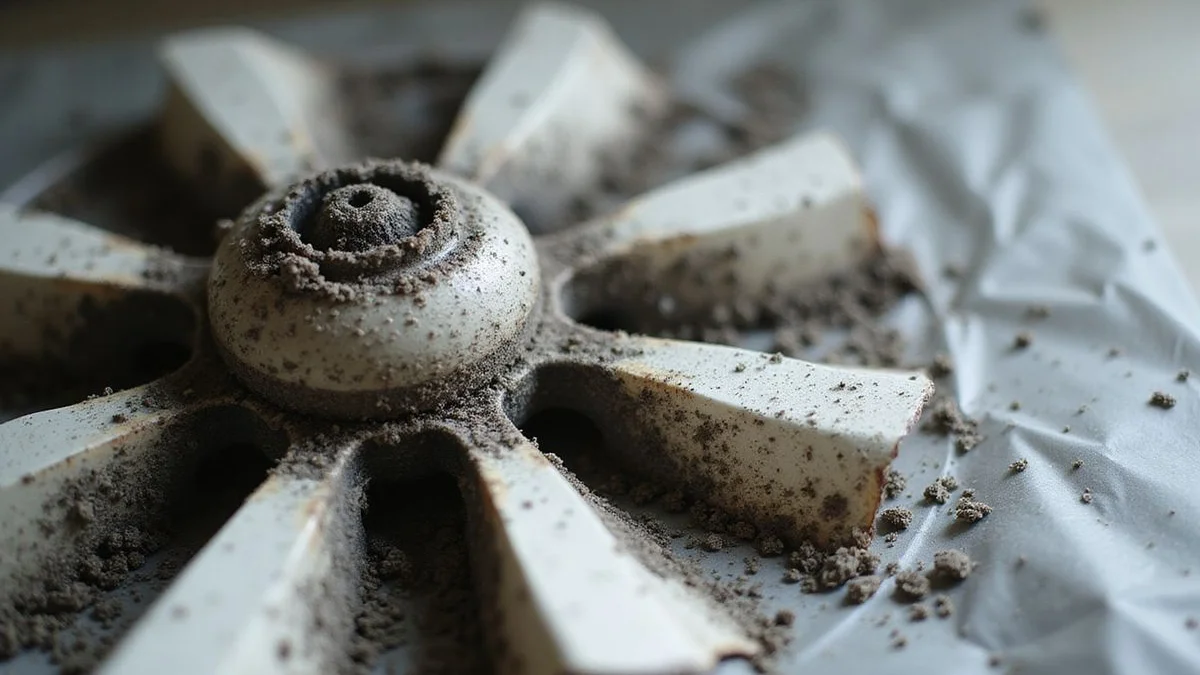
Visible black spots or fuzzy patches on the exposed metal parts indicate active mould colonies, such as Aspergillus. You can often see this grey-green discolouration by peeking through the vent or front air intake.
Surface wiping will make these visible spots disappear briefly, but they will always return in two to three weeks. The root system remains embedded in the internal fins, allowing the spores to continuously multiply in the dark, damp interior.
Our chemical wash process uses targeted solutions to eradicate these colonies at their source. Eliminating the roots stops the recurring cycle of mould growth and protects your hardware.
5. It’s been 2+ years since your last chemical wash
An air conditioner requires a chemical wash every one to two years as mandatory preventive maintenance, even if you do not see visible symptoms. Singapore tropical conditions guarantee that biofilm builds up continuously behind the scenes.
Catching this buildup preventively costs the same as reactive cleaning, while avoiding secondary damage like drainage leaks, coil corrosion, and severe compressor strain. The table below outlines the average cost differences between routine cleaning and major repairs in Singapore.
| Maintenance Type | Average Cost (Singapore) | Risk of Delay |
|---|---|---|
| Standard Servicing | $30 to $60 | Surface clean only; biofilm remains |
| Chemical Wash (Non-Dismantle) | $70 to $100 | Clears moderate buildup |
| Chemical Overhaul (Dismantle) | $120 to $250 | Essential for heavy blockages |
| Compressor Replacement | $400+ | Total system failure |
We advise our customers that preventive care is significantly cheaper than major component failure. Routine chemical treatments serve as a smart financial decision that extends the lifespan of your unit up to 15 years.
The cost of delaying
Delaying a chemical wash accelerates component damage, increases future repair costs, and significantly degrades your cooling efficiency. Homeowners who wait more than three years between chemical washes almost always require an additional mechanical repair.
These neglected systems face severe compounding issues that standard cleaning cannot fix:
- Biofilm thickening: The sludge becomes harder to remove and requires longer chemical soak times.
- Drainage blockage: Slime hardens and completely blocks the pipe, causing inevitable indoor water leaks.
- Accelerated coil corrosion: Biofilm sitting on aluminium fins eats away at the metal over time.
- Degraded indoor air quality: The fan continuously blasts mould spores directly into your breathing air.
Our financial analysis follows the industry 50 percent rule for air conditioner repairs. If repair and overhaul costs exceed 50 percent of the price of a brand new system, replacement becomes the better choice. You can easily avoid this premature replacement by maintaining a strict chemical cleaning schedule.
Indoor air quality: the overlooked risk
The biofilm in a neglected air conditioner acts as a constant source of respiratory irritation and is genuinely bad for your health. The unit circulates mould spores and allergens through your living space every single time the fan runs.
Studies from the National University of Singapore indicate that asthma prevalence in children has increased significantly, reaching approximately 20 percent today. Poor indoor air quality directly exacerbates these respiratory conditions, especially in our highly humid climate.
Customers frequently report these common symptoms just before they finally book a deep clean:
- A persistent sore throat that clears up when they travel but returns at home.
- Morning congestion that started during the haze season but never fully resolved.
- Children experiencing worsening eczema or skin allergy flare-ups.
- Cooking smells lingering in the room much longer than they used to.
We know that a chemical wash will not cure underlying medical conditions, but it does remove one of the most significant silent contributors. For families with asthma, eczema, or very young kids, a shorter chemical wash frequency of every 12 months provides much better protection.
Next step
You can verify the condition of your unit by sending us a quick video of the symptoms. We provide honest assessments to help you determine the exact level of service required before spending any money.
WhatsApp us a short video showing these specific areas:
- A close-up of the front vent, zooming into the grille slots.
- A few seconds of the air flowing out to demonstrate the speed.
- The external drainage exit point, if you can easily locate it.
Our service team will tell you honestly whether you are in chemical wash territory or whether standard servicing is still enough. You can book a chemical wash directly on the service page.
If you are experiencing any of these signs aircon needs chemical wash, taking prompt action will save you from expensive repairs.
Part of the Aircon Chemical Wash guide hub
← Back to the main Aircon Chemical Wash pageQuestions Answered
Frequently Asked Questions
How do I tell the difference between a servicing smell and a chemical-wash smell?
A servicing-level smell is a light dust or 'stale air' scent that clears within 1–2 minutes of startup. A chemical-wash-level smell is mouldy, sour, or distinctly biological — it lingers, gets worse when you run the unit longer, and doesn't clear even after filter rinsing.
If my aircon cools fine but smells bad, do I need chemical wash?
Usually yes. Biofilm on the coil and blower wheel produces the smell long before it blocks cooling enough for you to notice. Catching it at the smell stage means the chemical wash is a reset, not a rescue — and your unit stays on track.
Can black mould spots be cleaned without chemical wash?
No. Surface wipes remove the visible fungus but not the root mycelium, which grows back within weeks. Chemical wash is the only domestic-grade intervention that neutralises mould throughout the whole component, not just the surface.
 LICENSED
 About the Author
Mr Chong
Founder & Licensed HVAC Technician, Coolbest Aircon
Mr Chong founded Coolbest Aircon in Jurong after more than 18 years in Singapore’s HVAC industry. He started as an apprentice technician on HDB rooftops, moved into commercial chiller work, then built Coolbest to offer honest, diagnostics-first aircon servicing across the West. He holds a BCA-licensed contractor registration, NEA-certified refrigerant handler status, and personally trains every technician on the team. Mr Chong writes these guides to answer the same questions he hears on every job call.
Related Guides
Smelly Aircon: Removing Bad Odours
Mouldy, sour, or burning aircon smell? What each odour means for your Singapore home and whether you need chemical wash or urgent repair.
Read guide →Chemical Wash vs Normal Aircon Servicing
Side-by-side comparison of standard aircon servicing vs chemical wash: scope, price, when each is appropriate. Clear guidance from Coolbest Aircon Singapore.
Read guide →What Is an Aircon Chemical Wash?
Aircon chemical wash explained: dismantle, soak in cleaning solution, high-pressure jet, reassemble. When Singapore homes need it and what to expect.
Read guide →Ready for cool, clean air — today?
Chat with Coolbest on WhatsApp for same-day aircon service in the West.