Chemical Wash vs Normal Aircon Servicing: Which Do You Need?
Side-by-side comparison of standard aircon servicing vs chemical wash: scope, price, when each is appropriate. Clear guidance from Coolbest Aircon Singapore.
We often hear the same question from property owners asking about chemical wash vs normal aircon servicing.
The right answer depends entirely on the specific symptoms hidden inside your cooling unit. Our technicians at Coolbest Aircon Servicing built this guide to provide a clear, direct comparison between standard servicing and a full aircon chemical wash overhaul.
You will find exact decision rules at the bottom of this page to help you choose the correct maintenance path.
Side-by-side scope
We compare the exact tasks performed during each type of visit in the table below to clarify the technical differences. A standard session focuses on surface-level dust removal and basic operational checks.
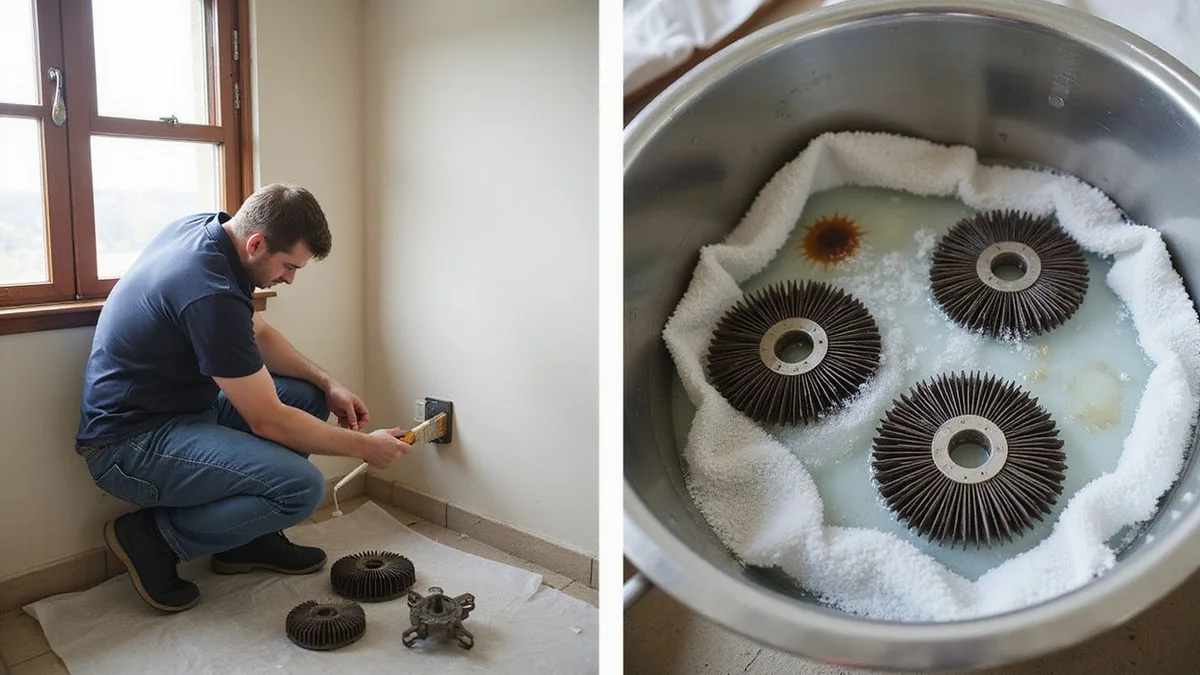
Our chemical overhaul involves dismantling the unit and applying alkaline-based cleaners at 100 to 150 PSI of pressure. This high-pressure approach targets deep-seated grime that a normal wipe simply cannot reach.
| What’s done | Standard Servicing | Chemical Wash (Overhaul) |
|---|---|---|
| Filter wash | Yes | Yes |
| Front cover wipe | Yes | Yes |
| Evaporator coil surface wipe | Yes (in place) | Yes |
| Evaporator coil deep clean | No | Yes (dismantle + soak + jet) |
| Blower wheel check | Visual only | Yes (removed, soaked, cleaned) |
| Drainage tray surface | Wipe | Yes (dismantled and flushed) |
| Drainage pipe flush | Basic | Yes (pressure flush) |
| Outdoor unit fin clean | Yes | Yes |
| Coil fin descale | No | Yes (high-pressure jet) |
| Insulation replacement | No | As needed |
| Mould and biofilm removal | Surface only | Full component |
| Time per unit | 30 to 45 min | 90 to 120 min |
| Pricing band | S$50 to S$115 / unit | From S$90 / unit |
When standard servicing is enough
We recommend a basic service for systems operating smoothly on a disciplined maintenance schedule. A regular cadence means no more than six months have passed since the last professional visit.
Our guidelines apply perfectly to most well-maintained HDB flats and condominiums using common brands like Daikin or Mitsubishi Electric. Standard servicing every three to six months is exactly right if your system meets these criteria:
- The unit is on a regular cadence (under six months since the last service)
- There are no sour or musty smells
- There are no visible black mould spots on the blower or coil
- There are no water leaks or drainage issues
- The unit is under three years old and receives regular checkups
- Airflow is normal and cooling remains consistent
When chemical wash is required
We see severe contamination frequently because Singapore experiences an average relative humidity of 82 percent according to the National Environment Agency. This constant moisture creates the perfect breeding ground for fungal growth inside your equipment.
Our teams regularly encounter Aspergillus mould forming thick black spots on the blower wheel. A deep chemical clean becomes strictly necessary when you notice specific warning signs inside your property.
Any one of the following issues justifies booking an overhaul:
- A sour or musty smell is present in the room
- Visible black mould spots appear on the blower wheel or coil
- Water is leaking from the indoor unit
- Slime is visible at the drainage exit
- Cooling performance has dropped noticeably despite a recent service
- More than two years have passed since the last chemical wash
- You are moving into a pre-owned home and the previous owner’s maintenance history is unknown
We strongly suggest immediate action if you spot two or more of these symptoms. Delaying the cleaning process will only worsen your indoor air quality and put unnecessary strain on the compressor.
The “recently serviced but still bad” case
We frequently hear from homeowners who feel frustrated after a standard service fails to resolve a musty smell. The hired technician simply cleans the accessible parts exactly as requested.
Our investigations show the actual root cause involves biofilm colonising throughout the drainage and deep coil sections. Biofilm is a resilient layer of bacteria and fungi that a basic wipe cannot reach.
A 0.25 millimetre layer of biofilm on an evaporator coil can reduce cooling efficiency by 20 to 30 percent, forcing the compressor to work harder and consume more electricity.
We train our technicians to flag these deeper contamination issues during the initial inspection. You have the clear option to upgrade on the spot or pause the work if we arrive for a standard session and spot severe buildup.
Price logic
We charge more for a complete overhaul because the physical process is highly intensive. The technician must completely dismantle the system to access the internal components safely.
Our comprehensive pricing reflects several key differences in the service delivery:
- The procedure takes two to three times longer per unit than a basic wipe.
- The work requires specialised alkaline-based chemicals and high-pressure jetting equipment.
- The dismantling process requires advanced technical skills to prevent plastic casing damage.
- The energy savings offer a massive return, often reducing electricity use by up to 30 percent.
We warn property owners against booking a basic service for a severely blocked unit just to save a few dollars. The standard service fails to clear the deep blockage, and the homeowner ends up paying for the chemical wash a month later anyway.
The integrated pattern
We recommend a specific, integrated maintenance cadence for heavy-use households in Singapore. A healthy cycle prevents the dreaded “dirty sock syndrome” and keeps your electricity bills low year-round.
| Month | Service | Cost notes |
|---|---|---|
| 0 | Chemical wash (baseline) | Higher one-time |
| 3 | Standard servicing | Normal per-unit |
| 6 | Standard servicing | Normal per-unit |
| 9 | Standard servicing | Normal per-unit |
| 12 | Standard servicing | Normal per-unit |
| 18 | Chemical wash | Higher one-time |
| 21 | Standard servicing | Normal per-unit |
| … | continuing pattern |
Our data shows that over two years, a typical household pays for roughly six standard services and two complete overhauls. This rhythm provides the most sustainable and cost-effective cooling performance.
The default: book standard, upgrade if needed
We recommend booking a basic appointment first to resolve the chemical wash vs normal aircon servicing dilemma for your home. The visiting technician will inspect the unit on-site and tell you honestly whether an overhaul is the real need.
Our policy allows you to bridge the two services on the same visit without paying double if the inspection reveals deep contamination. This transparent approach ensures you only pay for exactly what your system requires.
We invite you to WhatsApp us today to set up your initial visit for guaranteed clean air.
Part of the Aircon Chemical Wash guide hub
← Back to the main Aircon Chemical Wash pageQuestions Answered
Frequently Asked Questions
How much more expensive is chemical wash vs normal servicing?
Chemical wash is substantially more. Standard servicing is S$50–S$115 per unit; chemical wash starts from S$90 per unit and can be higher depending on unit size and whether the outdoor unit is included. It's a dismantle-and-soak procedure that takes 2–3× longer.
Can I alternate between standard and chemical wash?
Yes. The typical healthy pattern is standard servicing every 3–6 months with a chemical wash every 12–24 months. Alternation is how experienced Singapore homeowners keep units running at peak for their full lifespan.
What if I'm not sure which I need?
Book standard servicing. Our technician will flag on-site if a chemical wash is needed instead — and you won't be charged for the standard service if you upgrade. That's the safest default.
 LICENSED
 About the Author
Mr Chong
Founder & Licensed HVAC Technician, Coolbest Aircon
Mr Chong founded Coolbest Aircon in Jurong after more than 18 years in Singapore’s HVAC industry. He started as an apprentice technician on HDB rooftops, moved into commercial chiller work, then built Coolbest to offer honest, diagnostics-first aircon servicing across the West. He holds a BCA-licensed contractor registration, NEA-certified refrigerant handler status, and personally trains every technician on the team. Mr Chong writes these guides to answer the same questions he hears on every job call.
Related Guides
What Is an Aircon Chemical Wash?
Aircon chemical wash explained: dismantle, soak in cleaning solution, high-pressure jet, reassemble. When Singapore homes need it and what to expect.
Read guide →Signs Your Aircon Needs a Chemical Wash
Mouldy smell, slime at the drainage, black spots on the blower, weak cooling after normal servicing — the symptoms that mean chemical wash, not a regular service.
Read guide →Steam Cleaning vs Chemical Wash for Aircon
How steam cleaning compares to chemical wash for Singapore aircons: effectiveness on mould and coil deposits, cost, when each is enough. Coolbest's honest take.
Read guide →Ready for cool, clean air — today?
Chat with Coolbest on WhatsApp for same-day aircon service in the West.